Why Hurricane Remnants Hit Raleigh Basements Hard
When a hurricane remnant moves through Raleigh, it does not take a direct hit to cause problems. These storms often stall over the Piedmont, dropping several inches of rain in a few hours. The soil around your foundation becomes saturated faster than it can drain, and hydrostatic pressure builds against your basement walls. That pressure is the number one reason homeowners in Raleigh hurricane basement flooding happens even when the storm itself seems mild.
Raleigh sits in a region with clay-heavy soil that swells when wet and shrinks when dry. After a heavy rain event, that clay holds water against your foundation like a sponge pressed to a wall. Water finds the smallest hairline crack, the cove joint where the floor meets the wall, or a failed window well seal. Understanding this cycle is the first step in protecting your home, and it is why flood prevention starts long before the next storm is named.
First 24 Hours: What to Check in Your Basement
The first thing to check after a storm is standing water. If you see more than a puddle, do not wade in. Turn off power to the basement at the breaker if you can do so safely, and call a professional. For smaller amounts of water, look at where it entered: along the base of the walls, around the floor drain, near the water heater, or under windows. That location tells you a lot about whether you are dealing with a foundation issue, a drainage problem, or a plumbing failure.
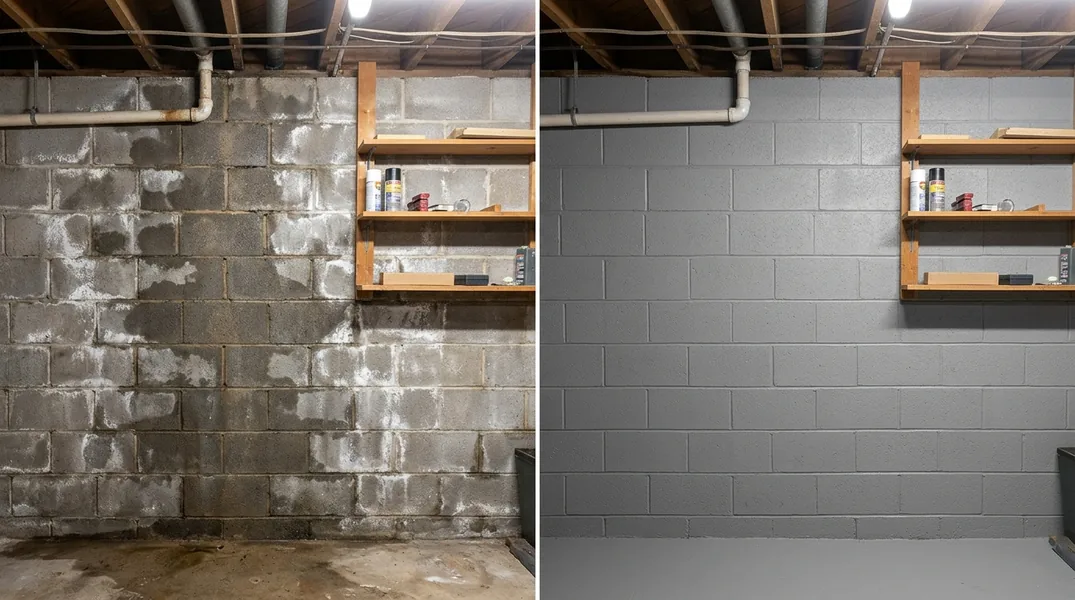
Next, check for dampness even if you see no standing water. Run your hand along the lower walls and press a paper towel into the cove joint. A musty smell is a strong signal that moisture is trapped. Look for white powdery deposits (efflorescence) on the concrete, which means water has been moving through the block. Also check any stored items: cardboard boxes that feel soft and photos that stick together are early warning signs of basement water after storm activity. If you find active water, call free estimate experts like Raleigh Waterproofing at (984) 205-7711 before the damage spreads.
Flooded Basement Cleanup: What to Do and What to Avoid
If your basement has taken on water, flooded basement cleanup needs to start quickly but safely. Remove wet rugs, cardboard, and upholstered furniture first, since these hold moisture and breed mold within 48 hours. Use a wet/dry shop vac for shallow water and run dehumidifiers and fans continuously for several days. Do not assume the concrete is dry just because it looks dry on the surface. Moisture trapped in block walls can keep the space humid for weeks.
Avoid the temptation to power-wash or hose down the basement floor, which adds more water to an already saturated space. Do not stack wet items against the walls, and do not paint or seal the floor until it is fully dry. If the water came in through a floor drain or toilet, treat it as contaminated and wear gloves and boots. For significant flooding, document everything with photos for your insurance claim before you move a single item. A professional assessment can tell you whether the water came from outside pressure or an internal plumbing issue, which matters for both repairs and coverage.
Tropical Storm Foundation Damage: Signs You Should Not Ignore
A tropical storm foundation problem often shows up as subtle changes rather than dramatic cracks. Walk the outside of your home and look for new gaps at the corners, stair-step cracks in brick veneer, or doors and windows that suddenly stick. Inside, check for cracks wider than a quarter inch, horizontal cracks in block walls, and floors that feel uneven or bouncy. Any of these signs after heavy rain mean the soil movement has stressed your foundation.
Water is patient. It widens existing cracks, erodes soil under footings, and pushes walls inward over time. What looks like a small leak this week can become a structural repair next year. If you notice a musty odor that will not go away or see water staining on the lower walls, it is worth having a professional look at your foundation before the next storm season. Foundation Waterproofing is not just about keeping the basement dry; it protects the structural integrity of the whole house.
Flood Prevention and Basement Waterproofing Near Me: When to Call a Pro
Some flood prevention steps are simple: clean your gutters, extend downspouts at least six feet from the foundation, regrade the soil so it slopes away from the house, and keep window wells clear. These steps help, but they cannot overcome saturated clay soil or a foundation that already has pathways for water. If you have had water in your basement more than once, or if you see efflorescence and damp walls, it is time to call a professional for Basement Waterproofing.
When you search for basement waterproofing near me in Raleigh, look for a company that inspects the whole system, not just the leak. A proper evaluation includes the exterior grade, gutter discharge, foundation cracks, and interior drainage. Solutions may include an Interior Drain Tile System to manage water that reaches the cove joint, or Exterior Basement Waterproofing to stop water before it enters. In some cases, Foundation Waterproofing is needed to address structural cracks and soil pressure. Raleigh Waterproofing serves homeowners across Raleigh, Cary, Garner, and Knightdale, and can help you decide which approach fits your home and budget.
Basement Waterproofing Cost in Raleigh: What to Budget
Homeowners often ask what waterproofing will cost after a storm. The honest answer is that it depends on the source of the water, the size of the basement, and whether the fix is interior, exterior, or both. A small crack injection costs far less than a full perimeter drain tile system. Exterior excavation is more involved and typically costs more than interior solutions, but it addresses the problem at the source. You can review general ranges on our pricing page, but a free estimate is the only way to get an accurate number for your home.
Do not wait for the next hurricane remnant to find out. Water damage gets more expensive the longer it sits, and mold remediation alone can cost thousands. A professional inspection now can catch small issues before they become structural repairs. Call Raleigh Waterproofing at (984) 205-7711 or request a free estimate online. We will inspect your basement, explain what we find, and give you a clear plan to keep your home dry through the next storm season.
Looking for a professional basement waterproofing contractor in Raleigh? Raleigh Waterproofing responds fast for all your basement waterproofing needs.
Get a Free QuoteOur services: Basement Waterproofing · Interior Drain Tile System · Exterior Basement Waterproofing