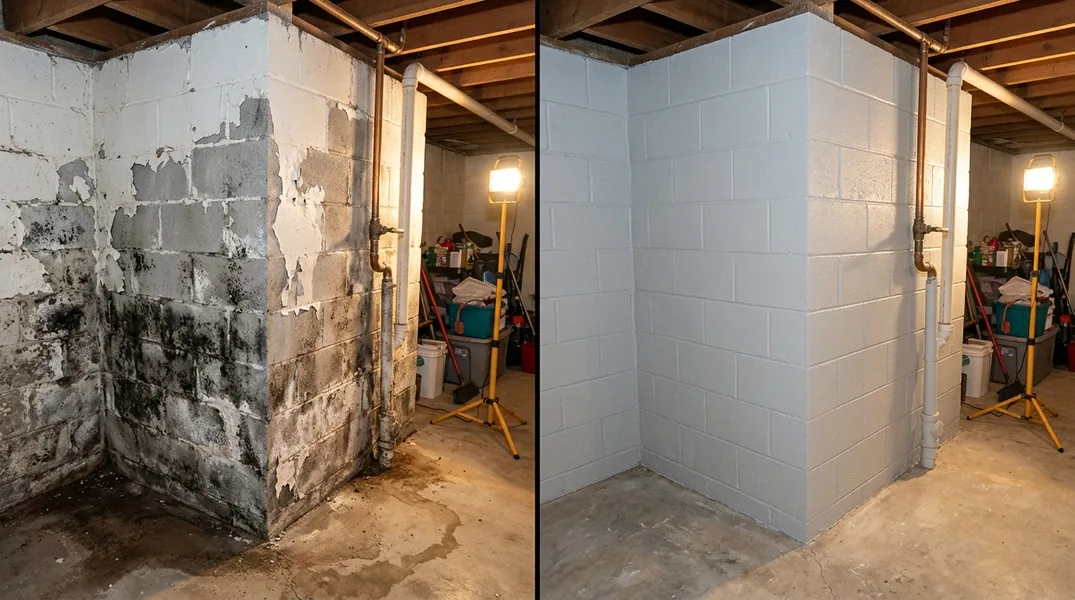
Why a Sloped Lot Changes the Waterproofing Conversation
If your home sits on a sloped lot in Raleigh, you already know that water behaves differently than it does on a flat subdivision lot. Gravity pulls surface runoff downhill, and when that slope directs water toward your foundation, the result is hydrostatic pressure against your basement walls. Over time, that pressure finds every crack, seam, and porous block, which is why so many sloped-lot homeowners end up researching Basement Waterproofing sooner than their neighbors on level ground.
The key difference is that a sloped lot gives you options. On a flat lot, exterior drainage is often limited to surface grading and downspout extensions. On a slope, you can potentially intercept water uphill before it ever reaches the house. That is why the interior vs exterior waterproofing decision is not just a preference question in Raleigh: it depends on where the water is coming from, how steep the grade is, and whether the soil around your foundation is clay-heavy or sandy. Understanding those factors is the first step toward choosing a solution that actually solves the problem instead of just managing the symptoms.
How Interior Drain Tile Systems Work (and When They Win)
An Interior Drain Tile System is installed along the inside perimeter of your basement footing. It collects water that has already entered the soil around the foundation and channels it to a sump pit, where a pump discharges it away from the house. Because the work happens indoors, you avoid excavating your yard, disrupting landscaping, or dealing with permits that exterior work sometimes requires. For many Raleigh homeowners, this is the more practical choice when the water problem is intermittent or when the exterior grade cannot be easily changed.
Interior systems also shine in finished basements. If you have drywall, flooring, or built-ins, an interior approach lets you protect the space without tearing up the outside of the home. The tradeoff is that interior drain tile does not stop water from pressing against the exterior of the foundation. It manages the water after it enters the block or concrete, which is effective but reactive. In a sloped-lot home where water is actively running toward the foundation, an interior system alone may not relieve the pressure that causes bowing walls or recurring efflorescence.
Exterior Basement Waterproofing and the Sloped-Lot Advantage
Exterior Basement Waterproofing attacks the problem at its source. The process typically involves excavating down to the footing, applying a waterproof membrane to the exterior wall, and installing drain tile or a drainage board that directs water away before it can penetrate. On a sloped lot, this approach has a distinct advantage: you can often use the natural grade to carry water to a daylight discharge point, meaning you may not need a sump pump at all. That is a meaningful difference for homeowners who want a low-maintenance solution.
The catch is cost and disruption. Exterior work requires digging, which means moving decks, patios, shrubs, and sometimes fences. It is also more expensive upfront than interior drain tile in most cases. However, for a sloped lot where the grade consistently pushes water into the foundation, exterior waterproofing is often the only way to stop the source of the problem. A proper Foundation Waterproofing plan for a sloped property usually starts by evaluating whether exterior interception is feasible before defaulting to an interior system.
Drain Tile vs Exterior Membrane: A Practical Comparison
When homeowners compare drain tile vs exterior membrane, they are really comparing two different philosophies. Interior drain tile is a collection system: it captures water and removes it. Exterior membrane is a barrier system: it keeps water out of the wall in the first place. In many Raleigh homes, the best answer is a combination, especially on sloped lots where water arrives from uphill and also rises from saturated soil during heavy summer storms.
A smart comparison looks at three factors: the source of the water, the condition of your walls, and your budget. If your walls are structurally sound and the water entry is minor, interior drain tile may be sufficient. If you see horizontal cracking, bowing, or water pouring in during storms, exterior work is usually the safer investment. For a detailed look at what each option costs in our area, see our pricing page, and consider scheduling a free estimate so a specialist can evaluate your specific slope and soil conditions.
Basement Waterproofing Near Me: When to Call a Pro in Raleigh
If you are searching for basement waterproofing near me in the Raleigh area, the timing question matters. Small damp spots and a musty smell are early warnings. Water pooling at the base of a sloped foundation, rust stains on basement floors, or doors that stick more in wet seasons are signs that hydrostatic pressure is already doing damage. Waiting usually makes the repair more expensive, because foundation issues compound.
A professional assessment should include a look at the exterior grade, gutter discharge, soil type, and the interior wall condition. At Raleigh Waterproofing, we serve homeowners across Raleigh and nearby communities, and we can tell you honestly whether an interior system, exterior work, or a targeted repair is the right fit. Call (984) 205-7711 to talk through what you are seeing, or request a free estimate online. The goal is not to sell the biggest job, it is to match the solution to your lot, your water, and your budget.
Looking for a professional basement waterproofing contractor in Raleigh? Raleigh Waterproofing responds fast for all your basement waterproofing needs.
Get a Free QuoteOur services: Basement Waterproofing · Interior Drain Tile System · Exterior Basement Waterproofing